Join Co Print Quadro Community:

Join Official Co Print Discord Group

Join Discord

Join Co Print Quadro Facebook Group

Join Facebook

Join Co Print Quadro Reddit Community

Join Reddit

Visit Co Print Instagram Page

Visit Instagram

Join Discord

Join Facebook

Join Reddit

Visit Instagram

View All Quadro Updates:

By Co Print
Company Updates
Mar 05, 2026

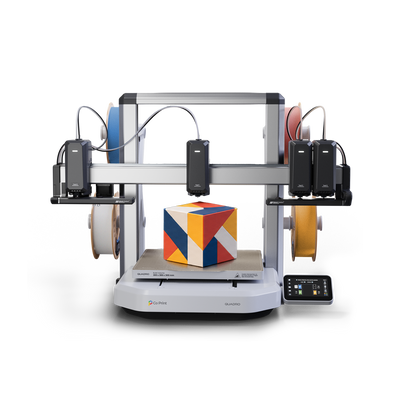
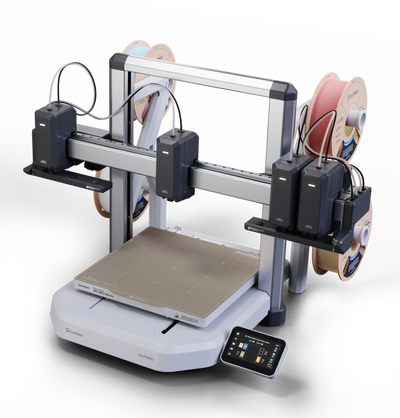
Our next-generation, waste-free IQEX 3D printer, Co Print Quadro, has received extraordinary interest since the very first day it opened for early reservations.
Thank you for the thousands of reservations and the trust you have shown.

Now, instead of keeping you as just observers, we want to make you a part of the process and customize the printer together with you.

In the first post of our Progress Update series (#1), we introduce QuadrOS, the operating system that powers Quadro, and announce its beta version.

In addition, we will share an interactive form where you can tell us what you would like to see in the interface and ask the questions you’re curious about.
This way, you will be able to directly take part in the development process.


What is QuadrOS?

QuadrOS is a modern printer operating system we developed for the IQEX printer architecture. It is built on the Klipper based and designed to synchronize and manage four print heads simultaneously.

With its intuitive interface, it delivers a powerful yet easy-to-use printing experience.

QuadrOS works in full synchronization with Orca Slicer based Co Print Slicer and automatically detects the filaments installed in the printer.

For example, when you prepare a multi-color print file, you can send the model directly to the printer over the network. QuadrOS automatically matches the colors assigned in the slicer with the filaments loaded in the printer and assigns the print heads accordingly.

Without any manual setup, the correct color is assigned to the correct head, and the printing process starts smoothly.

Since QuadrOS was designed from the ground up specifically for Quadro, the filament loading and placement screens are perfectly aligned with the hardware.

The physical filament layout on the printer is mirrored schematically in the interface, allowing users to instantly see which filament is inserted into which slot and manage them intuitively.

Now, let’s explore the interface page by page.


Printing Screen

When a print starts, you are greeted by the Printing screen.
This screen is designed to give you a clear, real-time overview of the active printing process.

A colored preview of the model—exactly as painted in the slicer—is displayed on the screen. Important information such as the file name, estimated print time, total layer count, and the currently printed layer is shown directly on the interface.

There is also a dedicated print-head status widget that shows which print head is currently active and which ones are parked. This allows you to follow the printer’s movement logic and workflow in real time.

On the right side of the screen, you’ll find a global monitoring and control panel that is always accessible. Here you can see:

  • Nozzle and bed temperature indicators

  • Fan controls

  • Mini status indicators for filament slots

You can also instantly access essential printing controls such as Stop, Pause, and Speed adjustment directly from this page.

When you click on any file on the Printing Files screen, you are taken to the Confirm Print screen.

Print Starter Screen

This screen allows you to match the colors used in the file with the available print heads before the print begins. QuadrOS analyzes the colors used in the model and compares them with the filaments currently loaded in the printer.

If a different filament is installed in one of the print heads, the system will automatically notify you.

For example:
If the model contains the color blue, but there is no blue filament loaded in the printer, a clear warning will appear on the screen and you will be presented with several options:

  • Change the filament

  • Match the color with a different print head

  • Cancel the print

This ensures that potential color mismatches are detected before the print starts, keeping the entire process fully under control.

Printing Files Screen

On the Printing Files screen, the print files you upload to the printer or send via Wi-Fi are displayed in a 3×3 grid layout.

Each file is presented with the following information:

  • Model preview

  • File name

  • Estimated print time

  • Amount of filament required

This allows you to quickly browse through your files, select the model you need, and start the print with a single tap.


Filament Management Screen

The Filament Management screen is designed to help you manage the filaments installed in the printer easily and in a controlled way.

By pressing the Load button for each print head, you can automatically load filament, and with the Unload button you can safely remove the installed filament. The entire process is handled in a controlled manner by the system.

The schematic layout on the screen is designed to exactly match the printer’s physical filament arrangement. This allows you to insert the correct filament into the correct slot intuitively, without confusion.

By tapping on the loaded filament, you can select:

  • Color

  • Type (PLA, ABS, etc.)

  • Material profile

  • Brand

Based on these selections, the appropriate automatic print settings are applied for that filament.

Once the setup is complete, the color and type of the installed filament are clearly displayed in the interface, ensuring full alignment between the physical and digital setup.


Filament Configuration Screen

The Filament Configuration screen is used to configure a newly loaded filament or edit an existing one.

The screen is organized into four columns:

Brand Selection

In the first column, you select the filament brand.
Based on your choice, print profiles are optimized and manufacturer-specific settings can be automatically applied.

Material Selection

The second column is for choosing the filament type.
You can select from different materials such as PLA, ABS, or PETG, activating pre-configured print settings optimized for that material.

Color Selection

In the third column, you select the filament color.
Color-specific purge settings are automatically applied, ensuring more efficient and controlled color transitions during printing.

Settings Preview

The final column provides a preview of the applied settings based on your selections.
All configurations are summarized here, showing clearly the parameters the system will use.

Once you have completed your selections, press the Confirm button to apply the configuration.


Move Axis Page

The Move Axis page allows you to manually control all axis movements of the printer. From this screen, you can move the X, Y, and Z axes and return the axes to their Home positions with a single tap.

At the top, there is a movement distance selector that determines how far the axes move when you press the directional buttons. With step options of 1 mm, 5 mm, and 10 mm, you can achieve both precise and rapid positioning.

On the left side, you can select which print head will be controlled during X-axis movements. This allows you to position each toolhead individually and safely in a multi-print-head setup.


Settings Menu

The Settings menu is the central control area where you can access all system configurations and general information about the printer.

This section includes key settings and management options such as:

  • Wi-Fi Settings – Configure and manage the wireless network connection

  • Calibrations – Perform axis, bed, and nozzle calibrations

  • Firmware Update – Update the system software and install new versions

  • Device Information – View device details, system version, and hardware specifications

  • Language Selection – Change the interface language

By grouping all system settings under a single menu, it provides a clean and easily accessible structure.


Printer Calibration Page

The Printer Calibration page allows you to perform automatic calibration using the sensors on the printer. The entire process is designed to achieve maximum accuracy with minimal manual intervention.

Full Self Check

This option runs all calibration steps sequentially and automatically. The printer completes system checks and becomes ready for printing.

Build Plate Leveling

This calibration precisely aligns the build plate with the print heads, optimizing first-layer adhesion and surface accuracy.

Toolhead Calibration

Performs 3D (X, Y, Z) position verification for all four print heads. Ensures maximum alignment accuracy in multi-head printing architectures.

Input Shaping Calibration

Analyzes vibrations to minimize motion-induced resonance, helping achieve smoother surface quality, especially at high printing speeds.

Full Self Check System

When the Full Self Check calibration is initiated, the printer automatically executes the process step by step.

First, all axes are safely moved to their Home positions, verifying the system reference points. Next, the process moves to the Toolhead Heating stage, where all four print heads are heated sequentially to 200°C.

Once all heads reach the target temperature, the system automatically proceeds to the Nozzle Cleaning stage.

Nozzle Cleaning Stage

During the Nozzle Cleaning stage, the print heads are directed to the integrated nozzle cleaning units located at the park stations.

Each toolhead tip is automatically cleaned in sequence, removing any residual material. Once the cleaning process is complete, the print heads are safely cooled to 140°C in a controlled manner and returned to their park positions.

Toolhead Position Verification Stage

In the fourth stage, the printer performs X, Y, and Z position verification for the print heads. This process is fully automated using the 3D calibration probe located at the rear of the build plate.

Each toolhead is measured sequentially, ensuring precise three-dimensional alignment.

In the interface, calibrated print heads are marked with a green “Done” status. The head currently undergoing calibration is displayed with an animated “Calibrating…” label, while those waiting their turn appear in grey as “Waiting”. This allows the user to monitor the entire process visually and in real time.

Build Plate Calibration Stage

In the fifth stage, the Build Plate Calibration process begins. Using a single print head, the build plate is mapped in detail and the Z-offset values are calculated with high precision. Based on these measurements, the plate surface is calibrated, ensuring the optimal first-layer height.

Once the calibration is complete, the generated Z-offset values are shared with all print heads. This ensures that in a multi-toolhead setup, all heads are aligned to the same reference plane, providing a consistent and uniform print start across the system.

Vibration Calibration Stage

In the final stage, vibration calibrations are performed for all print heads and the build plate. The system analyzes potential resonances that may occur during motion and applies optimizations to minimize vibration-induced errors.

This ensures smooth and consistent print surfaces, even at high printing speeds.

Completing the Full Self Check

This completes the Full Self Check, which includes all calibration steps.
When you click the Finish button, all calibration data is saved, and the printer becomes ready for printing.

Getting to Know QuadrOS 1.0 (Beta)

We’ve had the opportunity to experience and explore QuadrOS 1.0 (Beta) in detail. Next month, the beta version will be opened to everyone.

You can share the features you’d like to see in the interface or any ideas you have page by page via this Form.
This way, you can directly contribute to the development of QuadrOS.


Where Does Quadro IQEX Stand Now?

We know you’re eager to know! We share your excitement and impatience to get the product into your hands as soon as possible.

The Quadro chassis will be produced using aluminum injection technology, and the molds are currently being prepared. Serial production of the chassis components will begin shortly.

DFM analyses for the plastic injection molds are ongoing; once these analyses are complete, mold production will commence. The entire process is progressing carefully according to our planned production schedule.

Our goal is to deliver a plug-and-play product that is user-friendly, automated, made with high-quality materials, and thoroughly tested. We continue working relentlessly toward this goal.

Although it’s too early to announce a final price, we can confidently say that Quadro will be priced below $1000.

We will continue to share every step of the production and development process transparently with our valued backers. With this, we’ve completed the first part of our progress update series.

In the next update, we’ll share further progress and provide a beta tester application form, so you can experience the printer even before it officially launches.

We’re excited to have you follow along.

With love,
The Co Print Team

By Co Print
Company Updates
Jun 11, 2026

In the second article of our Progress Update series, where we share Quadro’s development process step by step, we are very excited to share important new developments with you.

In our previous update, we announced that the molds for the aluminum extrusion parts to be used in Quadro had been completed. We also shared detailed information about QuadrOS, the operating system that powers Quadro. Together, we took a closer look at QuadrOS’s interface structure, filament management system, automatic calibration steps, and the core logic designed to manage four toolheads in sync.

In this update, we would like to share that the Quadro development project is moving forward at a strong pace and is getting closer to the final stages before production.

In this article, you will see Quadro’s first working prototype and witness its first four-color print test process up close. We will also be sharing important details such as print speed, color transitions, cleaning efficiency, system stability, and the initial performance data we have gathered during the development process.

In our previous Progress Update, we stated that we wanted to see you not only as users following the process, but also as a community directly contributing to Quadro’s development. Your comments, suggestions, and feedback have been extremely valuable to us throughout this process.

We reviewed many of the suggestions you shared with us and included a significant portion of them in Quadro’s development process. Some features have already been directly added to the printer, while others have been included in our development roadmap and are planned to be integrated into the system in the upcoming stages.

In this article, we will share the new features shaped by user feedback, the improvements made on the prototype, and the latest stage Quadro has reached before production.

Now, let’s take a closer look at one of the most exciting stages in the development journey of Co Print Quadro.


1. Community Feedback Turns into Product Improvements

Some of the features added based on your requests are as follows:

1.1 Skip Object Feature

The Skip Object feature has been added to QuadrOS. With this feature, failed parts in multi-object prints can be individually canceled while the rest of the print continues.

1.2 Advanced Camera System

Taking into account the requests we received regarding the camera system, we selected a high-resolution, wide-angle camera. This allows both the print bed and the cleaning area to be monitored easily.

1.3 Open-Source and Community-Friendly Software

Many users pointed out that excessive customization made by some companies on Klipper and OrcaSlicer can reduce ease of use and disconnect users from community updates. We take this feedback very seriously.

In this direction, we would especially like to state that our software will be open-source.

QuadrOS will directly use the Klipper infrastructure and will continue to receive updates from the Klipper ecosystem. At the same time, custom interface improvements designed to enhance the user experience for Quadro’s unique architecture and additional functions will also be included in the system.

We are following the same approach on the OrcaSlicer side. While preserving the core structure, we will only provide additional features required specifically for Quadro.

1.4 Smart Maintenance Management

We are developing a new system within QuadrOS that centrally manages the printer’s maintenance processes.

Nozzle replacement reminders

Axis lubrication alerts

Periodic maintenance tracking

Step-by-step on-screen guidance

With this system, users will be able to perform many maintenance operations directly through the printer screen without needing to rely on a wiki.

1.5 Build Volume

Based on the feedback we received from you, we designed Quadro with a build volume of 300 x 300 x 300 mm. This allows Quadro to stand one step ahead of similar competitors in terms of print area.


2. Mechanical Structure

For Quadro’s critical components that require high rigidity, precision, and excellent flatness — such as the Z towers, main frame, Y bed assembly, X axis, and the carrier rails for the toolheads — we chose durable aluminum parts produced with aluminum injection molding technology instead of manufacturing methods such as laser cutting and bending, which can introduce higher tolerances and potential inaccuracies.

This approach allows us to achieve an extremely rigid structure that minimizes vibration, while also providing superior precision in areas where flatness is critical, especially the print bed.


3. Qdock Station: Clean Nozzle System

Quadro features specially designed smart parking stations on both the right and left sides of the X axis for its toolheads. These stations clean the nozzles of inactive toolheads, keep their tips sealed, and ensure they remain ready for the next color change.

Once a toolhead completes its print task, it moves to the right or left parking station depending on its position. There, the nozzle is cleaned first. After the cleaning process, the nozzle tip is sealed, and the toolhead is cooled down to approximately 175°C before entering standby mode.

To reduce waiting time during color changes, Quadro prepares the next toolhead before it is needed. The corresponding nozzle is automatically activated approximately 30 seconds before use and heated to printing temperature. This way, the print does not need to pause while the nozzle heats up; when the toolhead becomes active, the system can perform the color change quickly and seamlessly.

This smart parking and preheating system accelerates color transitions in Quadro’s multi-toolhead architecture while also helping reduce filament leakage, nozzle contamination, and unwanted marks on the print surface.

Additionally, a wide-angle camera is positioned in the right-side parking area. With this camera, users can monitor both the print bed and the cleaning area from a wider perspective, allowing for more controlled print supervision.


4. Quadro 360° Calibration System

Quadro’s four independent toolheads must align to the same reference point after each color change and continue printing from the exact point where the print left off. In multi-toolhead printing systems, this alignment is one of the most critical factors directly affecting print quality.

In mechanical systems, micron-level positional differences can occur between each toolhead due to assembly tolerances, manufacturing variations, and part positioning. If these differences are not properly calibrated, alignment issues during color transitions and inconsistencies in print details may occur.

For this reason, we developed a dedicated 360° calibration system for Quadro. This system precisely measures and calculates the positional differences of each toolhead and compensates for them through software. As a result, four independent toolheads can operate in sync as a single unified system throughout the print process.

Co Print Quadro
360° Toolhead Calibration
Side View · Z

The calibration process begins with the T0 toolhead and continues sequentially with all toolheads moving to the dedicated calibration area located at the rear-right section of the print bed. Each toolhead touches the calibration rod twice from five contact points: left, right, front, rear, and top, collecting positional data from each direction.

During this process, the measurements taken from the T0 toolhead are accepted as the reference data. Then, the T1, T2, and T3 toolheads repeat the same calibration steps. The values obtained from each toolhead are compared against the T0 reference, and the positional differences between them are calculated with high precision.

These calculated differences are automatically processed by the software, creating separate alignment values for each toolhead. This allows positional deviations caused by mechanical tolerances to be compensated through software, enabling all toolheads to operate in sync based on the same reference point.


In the video, Quadro parks all other toolheads and performs the 360° calibration of T0.


5. First 4-Color Print Test

As part of Quadro’s development process, many prototypes have been produced to date. These prototypes are currently being actively used in various test processes, including mechanical performance, software stability, long-term durability, and print quality. Based on the results obtained from these tests, mechanical improvements are being made while software optimization continues in parallel.

In this update, we would like to share one of the multi-color print tests we performed with one of the prototypes currently under active testing. This gives you the opportunity to see Quadro performing a multi-color print up close for the first time.

We would like to highlight an important point: the prototype shown in the images does not represent the final production version. Since testing and revision processes are still ongoing for the aluminum parts, the final surface treatments have not yet been applied to these components. Similarly, the plastic parts are currently being produced using MJF technology for rapid prototyping purposes.

For this reason, any surface differences, gaps, part mismatches, or color variations that may be visible in the video or images will not be present in the final product. The colors, surface textures, and overall finish quality of the plastic and metal parts seen on the printer will be updated and finalized in the mass production version.

The main purpose of this test is to transparently share how Quadro’s multi-toolhead printing system, color change process, and core mechanical-software synchronization perform under real printing conditions.

5.1 Color Printing and Performance Results

Quadro completed the four-color dragon model, measuring 52 x 58 x 60 mm, in a total of 2 hours and 58 minutes, including the print preparation process. This clearly demonstrates Quadro’s speed advantage in multi-color printing.

This model was printed using standard print settings, such as a 0.4 mm nozzle and 0.2 mm layer height. Soon, we will also share detailed comparison tests of the same model printed on different printers under the same conditions.

During the test, the color change time between the two farthest-positioned toolheads was measured at only 3.7 seconds, excluding the prime tower process. When the prime tower process is included, the total color change time is approximately 8 seconds. Quadro successfully completed the dragon model with 541 color changes.

These results show that Quadro’s multi-toolhead architecture provides a significant time advantage during color change processes, positioning the system as a fast, efficient, and high-performance solution for multi-color printing.


6. Quadro StatusLight Feature

To make Quadro’s four independent toolheads easier to manage, we integrated dedicated StatusLight bars onto each toolhead. This interactive lighting system provides real-time visual feedback to the user, especially during filament loading, tool selection, and the printing process, making the overall user experience much more intuitive.

When a tool is selected from the filament selection screen, the lights on all unselected toolheads automatically turn off. Only the StatusLight on the selected toolhead remains active and is highlighted with a spotlight effect. This allows the user to clearly see which toolhead is being operated without any confusion.

This structure provides a major advantage in a system with four different toolheads and multiple filament paths. The user can directly match the tool selected on the screen with the corresponding physical toolhead on the printer. As a result, filament loading, changing, and checking processes can be performed much faster, more intuitively, and with fewer errors.

The StatusLight system does more than simply indicate tool selection. When the filament color selected from the printer screen is successfully loaded into the corresponding toolhead and detected by the filament sensor, the light bar on that toolhead automatically changes to the selected filament color.

This allows the user to track which color is loaded in each toolhead not only through the software interface, but also directly through the printer’s physical light indicators.


7. Development Progress and Kickstarter Timeline

As Quadro approaches the final stages of mechanical design, software development, and overall system validation, it will move toward mass production preparations after prototype testing and interim improvements are completed.

In the upcoming process, the design parameters will be finalized based on the data obtained from testing, mechanical and software optimizations will be completed, and plastic injection molding processes will begin.

Following these stages, Quadro is planned to be launched for pre-order through a Kickstarter campaign in Q4 2026. Our campaign’s upcoming page will also be published on Kickstarter soon and made available for you to follow.

As throughout the development process, we will continue to transparently share all new updates regarding pre-production preparations, the campaign timeline, and Quadro’s journey toward mass production.

8. Beta Program and Quadro Community

As Quadro’s development process continues to move forward, your feedback and suggestions will remain one of the most important guides for us. For this reason, we encourage you to first share your ideas, expectations, and suggestions that you believe could contribute to Quadro’s development in the comments section below this article.

Your comments will play an important role in shaping the next development steps for Quadro. In addition, to follow the process more closely, exchange ideas with our community, and stay up to date with the latest developments, we will soon activate dedicated community channels for Quadro.

In the upcoming stages, we plan to launch a beta testing process with a limited number of users. Users who want to take part in the beta test program, experience Quadro at an early stage, and contribute to the final version of the product with their feedback will be selected from our community members who have been following us and the Quadro development process from the beginning and actively contributing to its progress.

We will announce the details of the beta test program and more through our new Quadro channels on Discord, Reddit, and Facebook.

We continue to develop Co Print Quadro not only as a next-generation multi-color 3D printer, but also as a powerful, reliable, and user-focused production platform shaped together with our community.

Thank you for being a part of this journey.

For more information and further details: info@coprint3d.com